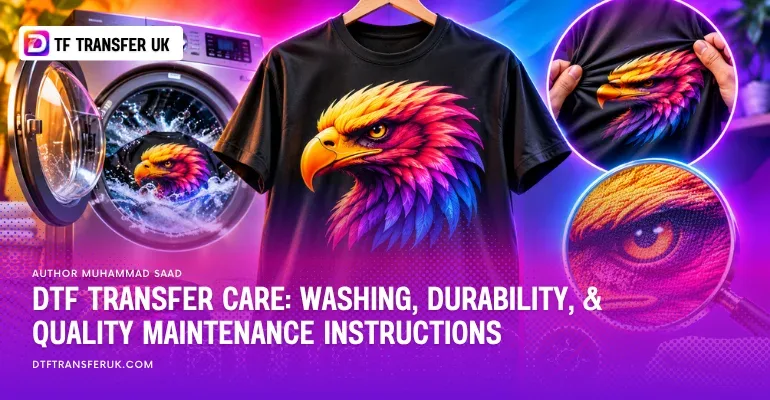
DTF transfer care is the process of washing, drying, and maintaining printed garments to preserve their colour, adhesion, and durability.
Proper washing involves turning garments inside out, using cold water at 30°C or below, selecting a gentle wash cycle, and avoiding harsh detergents.
DTF transfer durability also depends on correct heat press temperature, pressure, adhesive curing, and fabric compatibility. Maintaining transfer quality requires suitable artwork, careful application, proper storage, and protection from excessive heat and friction. These precautions help prevent cracking, peeling, and fading.
A correctly applied DTF transfer can withstand many wash cycles, although its lifespan depends on garment material, application accuracy, washing frequency, and everyday care.
What Are the DTF Transfer Washing Care Instructions?
DTF transfer washing care instructions are guidelines for cleaning printed garments without damaging the ink layer or weakening the adhesive bond. Wash DTF printed clothing inside out in cold water, preferably at 30°C or below, using a mild detergent and gentle washing cycle. Avoid bleach, fabric softeners, high heat drying, and ironing directly over the design.
Following the correct washing routine helps preserve colour vibrancy, print flexibility, and adhesion to fabric.
1. Wait at Least 24 Hours Before the First Wash
Wait at least 24 hours after heat pressing before washing a DTF printed garment. This is a common precaution recommended by transfer suppliers to allow the finished application to cool and settle before exposure to water, detergent, and mechanical agitation.
Washing immediately after pressing can put unnecessary stress on a newly applied design. Follow any longer waiting period specified in the transfer instructions.
2. Turn the Garment Inside Out
Turn your DTF printed T shirt, hoodie, or sweatshirt inside out before placing it in the washing machine.
This reduces direct friction between the printed surface, washing machine drum, and other garments. Repeated rubbing against rough materials, buttons, or zips can gradually wear the print surface and affect its appearance.
Washing inside out provides additional protection for large graphics, fine details, and areas exposed to frequent movement.
3. Wash in Cold Water at 30°C or Below
Cold water is recommended for washing DTF printed garments because it limits unnecessary heat exposure to the printed ink and adhesive layers.
Set the washing machine to 30°C or below, provided this also meets the garment manufacturer's care instructions. High washing temperatures can increase stress on the print, encourage garment shrinkage, and contribute to colour deterioration over repeated washes.
Cotton, polyester, and blended fabrics may have different laundering requirements. Always follow the more restrictive care instruction when the garment label and transfer guidance differ.
4. Choose a Gentle Washing Cycle
Select a delicate or gentle washing programme to minimise friction, pulling, and aggressive agitation.
Heavy washing cycles can increase mechanical stress on printed areas, particularly large solid graphics and designs positioned across flexible parts of the garment.
Avoid overloading the washing machine. Wash decorated clothing with similar fabrics and keep it separate from rough denim, heavy towels, and garments with exposed metal accessories.
5. Use Mild Detergent Without Bleach or Fabric Softener
Choose a mild detergent suitable for coloured clothing and follow its recommended dosage.
Avoid chlorine bleach, strong stain removers, and aggressive cleaning chemicals that may affect the printed inks, garment dyes, or adhesive layer.
Fabric softeners are also best avoided because they can leave residues on textile fibres and may interfere with the long term performance of decorated clothing.
If a stain appears near the design, clean the surrounding fabric gently rather than rubbing the printed surface with a stiff brush.
6. Air Dry the Garment Whenever Possible
Air drying is the preferred drying method for DTF printed clothes because it reduces exposure to heat and mechanical tumbling.
Hang the garment or lay it flat in a well ventilated area, following the fabric care label. Avoid prolonged direct sunlight, which can gradually fade garment dyes and printed colours.
If tumble drying is permitted by both the garment and transfer instructions, select a low heat setting. High dryer temperatures and prolonged drying cycles can increase stress on the print and adhesive.
7. Never Iron Directly Over the DTF Print
Do not place a hot iron directly on the DTF design. Concentrated heat and pressure can soften, distort, or damage the printed surface.
If ironing is necessary, turn the garment inside out and use a low temperature permitted by its care label. Keep the iron away from the printed area and avoid prolonged pressure over the back of the transfer.
After washing and drying, allow the garment to cool completely before folding or storing it. Avoid sharp, repeated creases across large printed graphics.
How We Increase DTF Transfer Durability?
We increase DTF transfer durability by printing designs onto transfer film, applying adhesive powder, and curing each sheet before dispatch. Our hot peel DTF transfers are designed for heat press application, where controlled temperature, pressure, and pressing time help the adhesive form a reliable bond with the garment.
DTF durability depends on both the transfer manufacturing process and its application to fabric. Properly cured adhesive, suitable garment preparation, and consistent heat press contact help reduce premature edge lifting, cracking, and peeling.
Adhesive Powder and Proper Curing
DTF printing uses heat activated adhesive powder to bond the printed design to textile fibres. The adhesive is applied to the printed ink layer and cured before the transfer is pressed onto the garment.
Correct curing is important because insufficiently cured adhesive may produce inconsistent bonding, while excessive heat exposure can affect the transfer's performance.
The adhesive must also cover the intended printed areas consistently. Missing adhesive around fine lines or edges can make those parts more vulnerable to lifting during wear and washing.
Correct Heat Press Temperature, Time, and Pressure
Accurate heat press settings are essential for achieving a durable DTF application. The adhesive requires sufficient heat and pressure to soften, contact the garment fibres, and form a secure bond as the transfer cools.
For our hot peel DTF transfers, the recommended application settings are:
Heat Press Setting | Recommended Value |
|---|---|
Temperature | 150°C to 160°C |
Pressing time | 10 to 15 seconds |
Pressure | Medium to firm |
Film removal | Hot peel |
Finishing press | 5 seconds with a Teflon sheet |
Use a properly functioning heat press with consistent temperature and pressure distribution. A household iron cannot provide the same level of controlled contact across the entire design.
Under pressing may leave areas insufficiently bonded, while excessive temperature or pressing time can affect the adhesive, printed layer, or garment itself.
Prepare the Fabric Before Applying the Transfer
A clean, dry, and smooth garment surface improves the conditions for adhesive bonding.
Prepressing the garment for a few seconds can help remove excess moisture and flatten wrinkles. Make sure the application area is free from lint, loose fibres, and anything that prevents the transfer from making even contact with the fabric.
Thick seams, zips, pockets, and raised garment features may create uneven pressure. Position the design on a flat area or use suitable heat press accessories where necessary.
Fabric compatibility also matters. Cotton, polyester, and blended textiles respond differently to heat and pressure. Test unfamiliar garments before applying transfers to a complete production batch.
Use the Correct Hot Peel Method
Our DTF transfers use hot peel film, which means the carrier film is removed while the application is hot, following the recommended pressing procedure.
Peeling incorrectly can disturb parts of the design that have not bonded evenly. Remove the carrier smoothly and inspect the printed area for incomplete adhesion, especially around small text, corners, and detailed edges.
Apply a Finishing Press
After removing the carrier film, cover the design with a suitable Teflon sheet and press it again for 5 seconds using our recommended instructions.
This finishing press helps consolidate contact between the transfer and fabric, supporting adhesion and improving the finished print surface.
The final application should have consistent adhesion across the design without loose edges or visible areas that have failed to transfer.
For larger orders, testing a sample on the intended garment is an important way to confirm that the pressing conditions produce suitable adhesion and flexibility before full production.
How Can You Maintain DTF Transfer Quality?
You can maintain DTF transfer quality by washing printed garments gently, limiting exposure to high temperatures, preventing unnecessary friction, and storing clothing correctly. These care practices help preserve the original colours, smooth printed surface, flexibility, and adhesive bond of the transfer.
A properly applied DTF design should remain attached to the fabric during normal wear. Its appearance and durability depend on how you handle the garment after printing.
Protect the Print From Excessive Heat
Excessive heat can affect the printed ink layer and adhesive bond, especially when a garment is exposed to repeated high temperature washing, tumble drying, or direct ironing.
Wash your DTF printed clothing at 30°C or below and allow it to air dry whenever possible. If tumble drying is permitted, use a low heat setting and remove the garment promptly after drying.
Never place a hot iron directly on the printed design. When ironing the surrounding fabric, turn the garment inside out and keep the iron away from the transfer.
Prevent Friction and Surface Damage
Repeated friction can gradually wear the printed surface, particularly on clothing that experiences frequent rubbing during movement or washing.
Turn printed garments inside out before laundering to reduce direct contact between the design and other clothing. Avoid washing DTF prints alongside rough fabrics, exposed zips, or garments with sharp accessories.
Do not scrub the printed area with a brush or abrasive cleaning material. If the garment becomes stained, gently clean the surrounding fabric using a mild detergent.
Avoid Excessive Stretching of the Printed Design
DTF transfers are flexible, but repeated forceful stretching can place stress on the printed ink and adhesive layers. This is particularly relevant for large solid graphics applied to fitted or highly elastic clothing.
Avoid pulling directly on the printed design when putting on or removing the garment. Handle the fabric around the print rather than stretching the printed area unnecessarily.
Choose garments with an appropriate fit so that the design does not experience excessive tension during normal wear.
Maintain the Original Colour and Print Appearance
DTF colours can gradually lose vibrancy through repeated exposure to washing chemicals, high temperatures, sunlight, and physical abrasion.
Use a mild detergent suitable for coloured garments and avoid bleach or aggressive stain removers on the printed surface.
Dry printed clothing away from prolonged direct sunlight. When storing garments, keep them in a clean, dry area to reduce unnecessary environmental exposure.
These precautions help maintain the colour contrast and fine details of logos, illustrations, and full colour graphics.
Store DTF Printed Garments Correctly
Proper storage protects DTF prints from unnecessary creasing, moisture, and prolonged pressure.
Make sure garments are completely dry before folding or hanging them. Avoid repeatedly folding large printed designs along the same sharp crease, particularly when storing multiple items in a stack.
Do not place heavy objects over printed clothing or store garments in excessively hot or damp conditions.
Check the Print for Early Signs of Damage
Inspect your DTF printed garments occasionally, particularly after several washing cycles. Look for lifted edges, small cracks, fading, or areas where the transfer appears to separate from the fabric.
Early peeling may indicate an application problem, while gradual surface wear can result from repeated friction and laundering.
If a print begins lifting, avoid pulling or scraping the affected area. Contact the transfer supplier for guidance on whether the design can be safely repressed. Additional heat should not be applied without checking the fabric and transfer requirements.
Consistent washing, drying, handling, and storage help maintain DTF transfer quality and reduce preventable damage throughout the garment's usable life.
Why DTF Care Matters
DTF care matters because the printed design contains an ink layer and heat activated adhesive that must withstand fabric movement, washing, drying, and daily wear. Although DTF transfers are flexible and suitable for many garment applications, their performance still depends on the strength of the adhesive bond and the conditions the finished garment experiences.
Washing at high temperatures, using harsh chemicals, or repeatedly exposing the design to friction can accelerate colour fading, surface wear, and adhesive deterioration.
Correct aftercare helps preserve the original appearance of the design while reducing avoidable damage. For clothing businesses, consistent washing instructions also help customers maintain their garments and support more reliable product quality.
Will My DTF Transfer Crack or Peel?
A DTF transfer can crack or peel if the adhesive bond is weak, the print experiences excessive stretching, or the garment is repeatedly exposed to unsuitable washing and drying conditions. Correctly manufactured and properly heat pressed transfers are designed to remain flexible during normal wear.
How Long Do DTF Transfers Last?
DTF transfers can last through dozens of wash cycles when manufactured correctly, applied with suitable heat press settings, and maintained with appropriate garment care. The exact lifespan varies because each transfer is exposed to different fabrics, washing conditions, and levels of everyday wear.
To extend the usable lifespan, wash at 30°C or below, turn the garment inside out, use mild detergent, and minimise high temperature drying.
What Can Affect the Lifespan of DTF Transfers?
The lifespan of DTF transfers is affected by adhesive quality, curing, garment composition, heat press settings, washing frequency, and exposure to mechanical or chemical stress. These variables influence how securely the design remains attached and how well its colours and surface finish are preserved.
Fabric type: Cotton, polyester, and blended textiles differ in fibre structure, elasticity, coatings, and heat sensitivity. These characteristics influence adhesive bonding and the way a printed design responds to garment movement.
Heat press application: Incorrect temperature, insufficient pressure, uneven platen contact, or inadequate pressing time can weaken adhesion. Following the specified application procedure helps reduce early peeling.
Adhesive curing: Incorrect curing during production can affect how consistently the adhesive bonds during heat pressing.
Washing frequency and temperature: Frequent laundering increases exposure to water, detergent, and friction. Hot washing can contribute to faster deterioration of the garment and printed surface.
Drying conditions: High dryer temperatures and prolonged tumble drying increase thermal and mechanical stress. Air drying generally provides gentler conditions.
Chemicals and cleaning products: Bleach, aggressive stain removers, and unsuitable detergents can affect printed colours, adhesive performance, and garment fibres.
Stretching and abrasion: Repeated stretching, rough fabric contact, and friction against other surfaces can gradually wear or damage printed areas.
Storage conditions: Excessive moisture, sunlight, heat, and repeated folding across the design can affect unused transfers or finished garments.