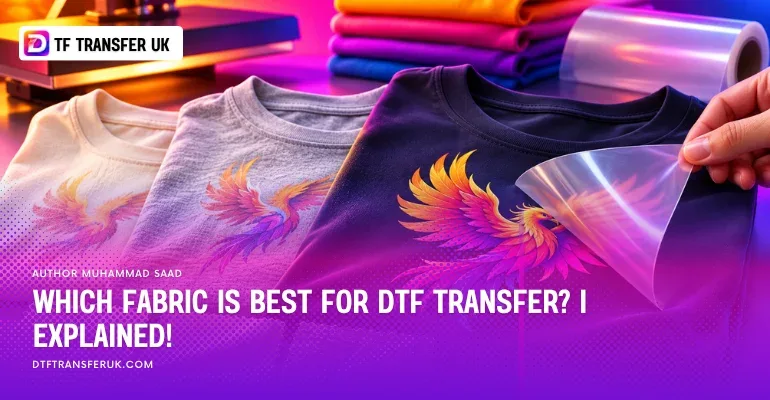
100% cotton is generally the best fabric for DTF transfers because its relatively high heat tolerance and smooth, stable surface make application more straightforward. Cotton-polyester blends are also reliable for everyday clothing, while 100% polyester works well when the correct pressing conditions are used to reduce heat damage and dye migration.
DTF transfers can also work on denim, canvas, linen, tri-blends, rayon, viscose and certain bamboo-derived fabrics. However, the results become less predictable with nylon, fleece, sherpa, wool, silk, corduroy, leather, faux leather, and highly elastic or moisture-wicking performance fabrics. Their texture, coatings, stretch and heat sensitivity can affect how securely the transfer adheres.
Choosing the right fabric depends on whether you want the best print quality, comfortable everyday clothing, durable sportswear or a suitable material for testing new designs.
Some fabrics should be avoided without specialist transfer systems, while common mistakes such as ignoring fabric composition, using unsuitable pressing settings or skipping wash tests can affect the finished garment.
1. 100% Cotton (Best Overall for DTF Transfers)
100% cotton is one of the most dependable fabrics for DTF transfers, especially when printing T-shirts, hoodies, sweatshirts and everyday clothing. It generally tolerates the temperatures needed to activate the transfer adhesive, and a smooth cotton surface allows even contact between the design and the fabric.
DTF printing uses a heat-activated adhesive to bond the printed design to the garment. The ink does not need to soak directly into cotton fibres, as it would in some other printing methods. Instead, suitable temperature, time and pressure help secure the transfer to the fabric surface. This makes cotton particularly convenient for full-colour graphics, detailed logos and designs applied to both light and dark garments.
Not all cotton garments produce identical results. A smooth, tightly knitted cotton T-shirt generally provides a more even printing surface than loosely woven or heavily textured cotton. Moisture, seams and inconsistent pressure can still affect adhesion.
2. 100% Polyester (Best for Suitable Sportswear)
100% polyester works with DTF transfers and is particularly useful for sports jerseys, team uniforms, workwear and lightweight performance clothing. Unlike cotton, polyester is a synthetic material that may react differently to heat, so the main challenge is not whether DTF can adhere but whether the garment can tolerate the application conditions without damage.
One concern is dye migration. When certain dyed polyester fabrics are heated, dye can move into the printed transfer and discolour the design. This is especially noticeable when a white graphic develops a pink, red or another unwanted tint after being applied to a strongly coloured garment.
Roland DG's guidance on polyester DTF application describes this problem and recommends 135°C for 10 seconds for its specified DTF system, compared with 166°C for 15–20 seconds on cotton and many blends. These are product-specific settings rather than universal instructions.
Polyester is therefore a good choice for DTF sportswear, but the garment's dye stability, heat tolerance and the transfer supplier's instructions must be checked before printing a full batch.
3. Poly-Cotton Blends (Best Balance of Comfort and Practicality)
Poly-cotton blends combine cotton and polyester in a single fabric, commonly in proportions such as 50% cotton and 50% polyester or 65% polyester and 35% cotton. They are frequently used for T-shirts, polo shirts, school uniforms, workwear and sweatshirts.
These blends generally work well with DTF transfers because their surfaces can provide sufficient contact for adhesive bonding while offering the practical properties of both fibres. Cotton contributes absorbency and a familiar soft feel, while polyester can improve dimensional stability and resistance to creasing, depending on the fabric construction.
The main consideration is the blend ratio. Cotton-rich fabrics may tolerate application conditions closer to those used for cotton, while polyester-rich garments need greater attention to heat sensitivity and possible dye migration.
For everyday branded clothing, poly-cotton is a practical alternative to pure cotton. However, printers should check the actual fibre percentages rather than assume every blended garment needs the same heat-press settings.
4. Tri-Blends (Cotton, Polyester and Rayon)
Tri-blend fabrics usually combine cotton, polyester and rayon to produce lightweight, soft clothing with a distinctive drape. They are popular for fashion T-shirts, casualwear and garments intended to feel softer or lighter than conventional cotton clothing.
DTF transfers can work on tri-blends, but the different fibres respond to heat in different ways. Cotton generally handles pressing well, polyester can introduce dye-migration concerns, and rayon may be more sensitive to excessive heat and pressure. The fabric's light weight can also make unwanted press marks more visible.
The best results usually come from a smooth tri-blend garment and a compatible transfer that can be applied without damaging its more delicate fibres.
Tri-blends are therefore suitable when garment comfort and appearance are priorities, but they are less straightforward than standard cotton for repeatable wholesale production. Testing the exact garment is important before decorating larger quantities.
5. Nylon (Possible with Compatible Transfers)
Nylon can be used for jackets, windbreakers, bags, sportswear and technical outerwear, but it is not automatically compatible with every DTF transfer.
The difficulty comes from its heat sensitivity and surface properties. Some nylon fabrics contain water-resistant or other specialist coatings that can interfere with adhesive bonding. Even if a design initially sticks to the garment, it may not remain securely attached after flexing or washing.
Compatibility depends heavily on the transfer system.
Nylon should not be treated as universally suitable or universally unsuitable for DTF.
Before printing nylon garments, confirm that the transfer supplier supports the exact material, check for coatings and test adhesion and heat damage. For standard wholesale transfers without confirmed nylon compatibility, choosing another fabric is the lower-risk option.
6. Denim (Suitable for Jackets, Jeans and Bags)
Denim generally works well with DTF transfers because most conventional denim is made predominantly from cotton and can tolerate heat pressing. This makes it suitable for custom denim jackets, jeans, tote bags and fashion accessories.
Denim has a distinctive twill weave and is often thicker than ordinary T-shirt fabric. Its raised texture can affect how evenly a transfer sits on the garment, particularly when a design contains very fine details.
The location of the print also matters. Pockets, heavy seams, rivets and folded sections can prevent the heat press from applying consistent pressure across the design. If part of the transfer receives less pressure, the adhesive may not bond properly.
7. Canvas (Suitable for Tote Bags and Accessories)
Canvas is another practical material for DTF transfers, particularly for tote bags, aprons, promotional merchandise and other accessories. Cotton canvas usually has sufficient heat tolerance for compatible transfers, although its thickness and weave can make it less forgiving than smooth cotton jersey.
Because canvas is often tightly woven but noticeably textured, the transfer may follow some of the surface's unevenness. A coarse canvas can therefore produce a less uniform finish than a fine, smooth canvas.
A second consideration is the material's finish. Some bags contain water-repellent treatments, wax coatings or other surface finishes that may interfere with adhesive bonding. The fact that a bag is described as canvas does not guarantee that its surface is suitable.
Uncoated, relatively smooth canvas is generally the better choice. Businesses printing large numbers of promotional tote bags should test the particular bag specification and check that seams or handles do not disrupt pressure.
8. Fleece and Sherpa (Depends on Surface Texture)
Fleece and sherpa require careful distinction because the name of the fabric does not fully describe its printing surface.
A sweatshirt made with smooth fleece-backed fabric can work well with DTF transfers when the design is applied to the smooth outer face. Many hoodies and sweatshirts use this construction, making them practical options for everyday branded clothing.
The situation changes with thick, fluffy fleece or sherpa. These materials contain raised fibres that create an uneven surface. When the transfer is pressed, the adhesive may contact the tops of the fibres without bonding consistently across the lower areas.
A deep pile can also flatten under pressure, changing the appearance of the surrounding material. This makes detailed graphics harder to apply cleanly and may reduce the reliability of adhesion.
9. Lycra, Spandex and Elastane (Suitable with Stretch-Compatible Transfers)
Lycra, spandex and elastane are names associated with highly elastic fibres used in leggings, fitted sportswear, dancewear and other stretch garments.
DTF transfers can work on fabrics containing these fibres, but the transfer must be able to move with the garment. When a highly elastic material stretches, the printed design experiences the same movement. If the transfer does not have sufficient flexibility, cracking, lifting or distortion may occur.
Heat sensitivity is another concern because many elastic garments combine elastane with polyester or nylon. Pressing at a temperature designed for cotton may damage the fabric or affect its stretch properties.
Transfer Express identifies stretch-compatible transfer systems for garments containing Lycra and spandex, illustrating why the choice of transfer matters as much as the material.
10. Performance and Moisture-Wicking Fabrics
Performance fabrics are designed for activities such as running, training and outdoor sports. They are commonly made from polyester, nylon, elastane or combinations of these materials, sometimes with specialised finishes to manage moisture.
DTF transfers can work on many of these garments, but performance fabric is not a single fibre type. Two shirts described as moisture-wicking may have different compositions, surface treatments and heat tolerances.
Some materials have smooth, low-friction surfaces or functional coatings that make adhesive bonding more difficult. Others contain significant stretch, meaning the printed transfer must remain flexible during movement.
High pressing temperatures can also leave shiny marks, flatten the fabric or damage the garment's finish. For these reasons, performance clothing should be matched with a transfer intended for the relevant synthetic or stretch material.
11. Rayon and Viscose (Possible but Heat-Sensitive)
Rayon and viscose are regenerated cellulose fibres commonly used in lightweight shirts, dresses, fashion T-shirts and soft blended clothing.
DTF transfers can be applied to suitable rayon and viscose fabrics, but they require more careful handling than conventional cotton. Their softness and drape often come from relatively lightweight fabric constructions, which may be prone to visible press marks, distortion or changes in surface appearance.
The main challenge is achieving sufficient heat and pressure for the transfer adhesive without damaging the garment.
Smooth, stable rayon blends may be easier to decorate than very thin or loosely structured viscose garments. However, the precise heat tolerance depends on the fabric construction, dyes and finishing treatments.
Rayon and viscose are therefore possible DTF materials, but they should not be selected for large production runs without a successful test press and appropriate durability checks.
12. Bamboo Fabric (Check the Actual Fibre Composition)
Clothing marketed as bamboo is frequently made from viscose or rayon produced using bamboo as a cellulose source, rather than being woven directly from natural bamboo fibres.
This distinction matters for DTF transfers because a soft bamboo-derived viscose T-shirt should be assessed according to its actual fibre composition and construction, not simply the word 'bamboo' on its product description.
Bamboo-derived viscose may accept a compatible DTF transfer, but lightweight garments can be sensitive to heat and pressure. Excessive pressing may affect the fabric's smooth appearance, cause distortion or leave visible marks.
Bamboo-cotton blends may behave differently because the cotton content changes the material's structure and thermal response.
13. Linen (Suitable on Smoother Weaves)
Linen is a natural fibre made from flax and is commonly used for shirts, summer clothing, aprons, bags and other textile products. It can work with DTF transfers because many linen fabrics tolerate heat pressing, provided the garment and transfer specifications are compatible.
The main difficulty is surface texture. Linen often has visible slubs, irregular yarn thickness and a more open weave than standard cotton jersey. These characteristics may make a transferred image look less uniform, especially when the artwork contains narrow lines or fine detail.
Linen also creases easily, so the printing area must lie flat during pressing. Uneven pressure across folds or heavily textured areas can affect adhesion.
A tightly woven, smoother linen fabric is generally preferable to coarse or loosely woven linen for detailed DTF designs.
Linen can be a suitable choice for customised premium accessories and casualwear, but it usually requires more surface preparation and testing than standard cotton.
14. Wool and Wool Blends (Higher-Risk Materials)
Wool and wool blends are more challenging for DTF transfers because their appearance and structure can change under heat, moisture and pressure.
Many wool fabrics have a raised, textured or delicate surface. Pressing may flatten fibres, introduce unwanted shine or alter the fabric's finish. Some wool products are also susceptible to shrinkage or felting under unsuitable treatment conditions.
A tightly woven wool blend may provide a more manageable printing surface than a thick wool knit or heavily brushed fabric, but that does not guarantee compatibility.
Even when the adhesive bonds successfully, the heat-pressed area may look different from the surrounding garment.
For premium wool clothing, large designs and standard DTF settings should be avoided unless the supplier specifically confirms suitability. Small test applications are essential, and embroidery or another decoration method may be more appropriate for some products.
15. Corduroy (Challenging Because of Raised Ridges)
Corduroy has a distinctive surface formed by raised parallel ridges known as wales. This structure makes it more difficult to achieve the even contact needed for DTF transfer adhesion.
When the transfer is pressed onto corduroy, its adhesive may contact the tops of the ridges more strongly than the recessed areas between them. As a result, parts of the design may bond unevenly, particularly when the fabric has deep or widely spaced wales.
Heat and pressure can also flatten the ridges, leaving a visible rectangular mark around the printed area.
Fine-wale corduroy may be easier to work with than wide-wale corduroy because its surface is less deeply ridged. However, compatibility still requires testing.
16. Silk (Possible but Not Recommended for Routine DTF)
Silk is a delicate natural fibre used in premium clothing, scarves, blouses and fashion accessories. Although certain specialist transfer systems may work on silk, it is not a dependable general-purpose choice for standard DTF production.
The main concern is the effect of heat and pressure on the fabric. Silk can develop visible shine, creasing or changes in texture when handled incorrectly. Its delicate surface also makes damage more noticeable than on heavier everyday clothing.
Another issue is the appearance and feel of the finished design. A solid DTF transfer creates a printed layer that may feel comparatively firm against lightweight silk and affect how the garment drapes.
Any proposed application should be confirmed with both the garment manufacturer and the transfer supplier, followed by testing on identical material.
17. Leather and Faux Leather (Compatibility Depends on the Finish)
Leather and faux leather can sometimes accept specialist DTF transfers, making them potential materials for bags, accessories and decorative panels. However, neither should be treated like ordinary cotton or polyester fabric.
Genuine leather may contain oils, dyes and protective finishes that affect how well a heat-activated adhesive bonds. Excessive heat can also discolour or mark the surface.
Faux leather introduces different concerns because it is often made with polyurethane or PVC-based surface layers. Some of these coatings may soften, distort, bubble or change appearance when exposed to heat and pressure.
Even if a transfer adheres initially, repeated bending of the material can place stress on the printed design.
For both materials, compatibility must be confirmed for the specific product. Where testing is possible, examine the surface after pressing and assess adhesion after bending and normal handling. Standard cotton pressing settings should not be applied without verification.
What Are the Fabrics to Avoid With DTF Transfers?
The fabrics to avoid with standard DTF transfers are those that cannot tolerate the required heat, prevent the adhesive from bonding properly or change significantly under pressing pressure. The decision should be based on the actual garment and the transfer system rather than the fibre name alone.
Heavily coated waterproof fabrics are among the materials that need the greatest caution. Water-repellent and other specialist surface treatments may interfere with adhesion, particularly on nylon jackets and technical outerwear. If a supplier cannot confirm compatibility, these garments are poor candidates for routine wholesale printing.
Deep-pile sherpa, heavily textured fleece and wide-wale corduroy are also difficult because their uneven surfaces can prevent consistent contact. The transfer may bridge raised fibres or ridges instead of bonding securely across the complete design.
Very delicate silk, wool and heat-sensitive synthetic fabrics should be avoided when their heat tolerance is unknown. The application process may cause shine, distortion, shrinkage or damage that cannot be corrected simply by changing the transfer.
Highly elastic garments are another concern when the print must stretch substantially during normal wear. DTF is possible on suitable stretch fabrics, but an incompatible transfer may crack or lift as the garment moves.
Nylon requires a specific qualification: some transfer systems support particular nylon fabrics, while others explicitly exclude them. It should therefore be avoided whenever compatibility with the supplied transfer has not been established.
The safest approach is to reject untested fabrics that cannot meet both requirements: tolerating the application conditions and maintaining acceptable adhesion during use.
How to Choose the Best Fabric for Your DTF Project
To choose the right fabric for DTF transfers, consider the level of print detail you need, how the garment will be worn, its fibre composition and whether it can tolerate the required heat and pressure.
Smooth cotton is generally the most reliable starting point for detailed prints, cotton-polyester blends are practical for everyday clothing, and polyester is often suitable for sportswear.
Choose Smooth Cotton for Detailed, High-Quality Prints
A smooth, tightly knitted 100% cotton garment is a strong choice for detailed logos, small lettering and designs with sharp edges. Its relatively even surface allows the transfer to make consistent contact with the fabric, which helps achieve clean outlines and uniform adhesion.
Cotton also avoids the dye-migration problems associated with some polyester garments. However, print quality still depends on the artwork, transfer production and pressing conditions, so a suitable fabric alone cannot guarantee a perfect result.
Consider Cotton-Polyester Blends for Everyday Clothing
Cotton-polyester blends are well suited to branded T-shirts, uniforms, workwear and promotional clothing where comfort and durability are both important.
The cotton component contributes absorbency and a familiar feel, while polyester can improve shape retention and resistance to creasing. The exact result depends on the blend ratio and garment construction.
Check Polyester Compatibility for Sportswear
Polyester is commonly used in sports jerseys, training tops and performance clothing, making it a practical option for DTF sportswear.
Some polyester garments are prone to dye migration or heat damage, particularly when they contain strongly coloured dyes. Stretch fabrics may also require a transfer that can flex with the material without cracking or lifting.
Check the garment's composition, dye stability and any moisture-wicking or protective finishes. Use the pressing instructions supplied for the transfer system and test the finished design after stretching and washing before producing a wholesale batch.
Test New Designs on Cotton Before Moving to Other Fabrics
A smooth 100% cotton T-shirt is a useful starting point for checking the size, placement, colour appearance and fine details of a new DTF design. Its relatively predictable surface makes it easier to identify potential artwork or transfer-production problems.
Once the design looks correct, test it again on the actual fabric intended for the finished product. A transfer that works well on cotton may require different application conditions when printed on polyester, nylon, fleece or another material.
What Are the Mistakes When Choosing Fabric for DTF Transfers?
One common mistake is assuming that all fabrics work equally well with DTF.
Although DTF supports more material types than some other garment printing processes, compatibility varies according to fibre composition, surface texture, coatings and the transfer system being used.
Another mistake is using the same pressing settings for cotton, polyester and other synthetics. Cotton generally tolerates higher temperatures, while polyester may require lower settings to reduce dye migration and heat damage.
Nylon and delicate materials introduce additional restrictions. Using more heat is not automatically the solution when a transfer fails to adhere.