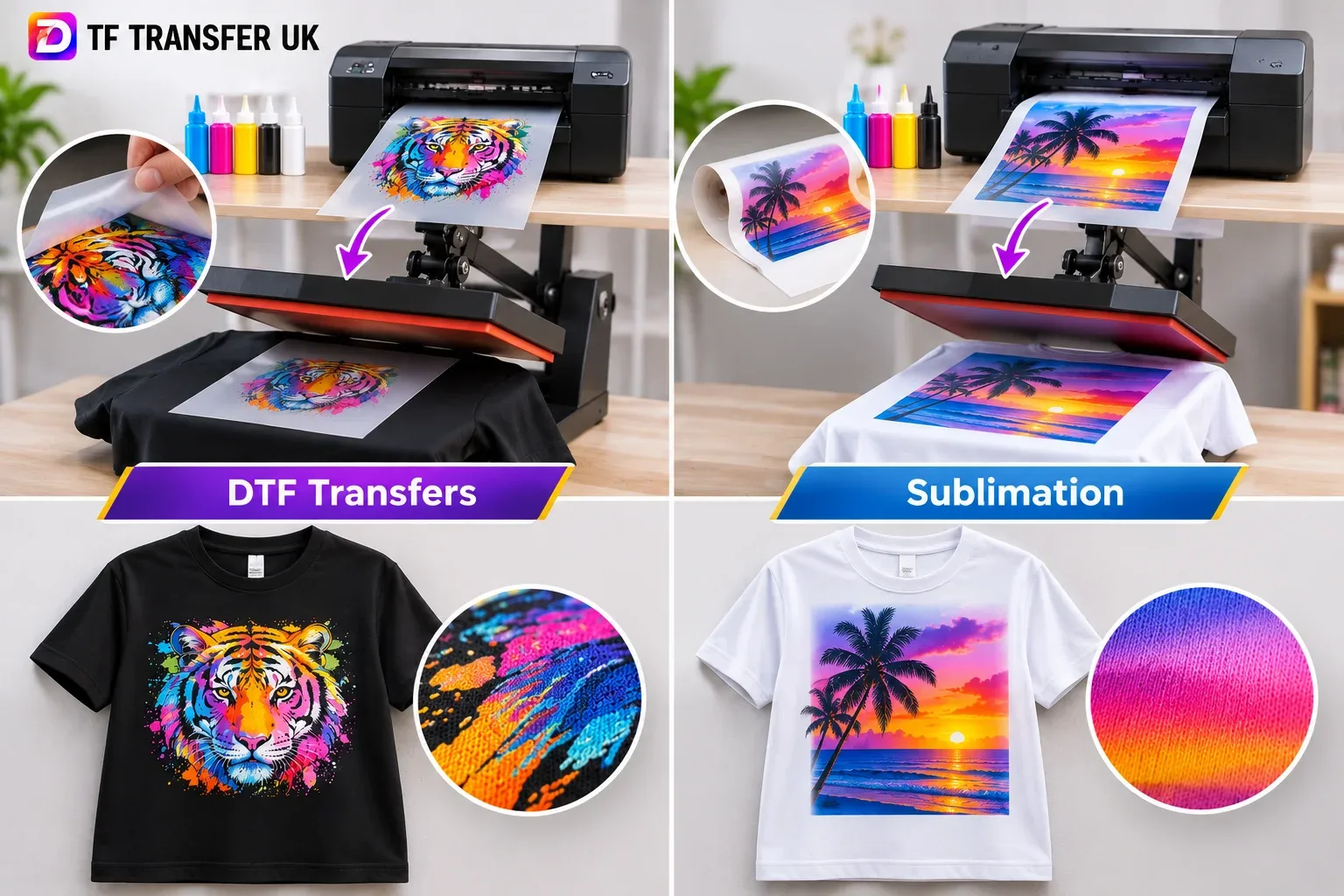
The main differences between DTF transfers and sublimation are their printing processes, ink composition, material compatibility, color compatibility, print texture, breathability, durability, production costs, and applications. DTF transfers work on both light and dark fabrics, including cotton, polyester, and blends, whereas traditional sublimation works best on white or light-colored polyester fabrics and polymer-coated products.
DTF transfers and sublimation are two digital heat-transfer printing methods used to customize apparel, accessories, and promotional products. DTF (Direct-to-Film) transfers use pigment-based inks, transfer film, and adhesive powder to bond printed designs to the fabric's surface. Sublimation uses heat to transform solid dye into gas, allowing it to penetrate polyester fibers or polymer-coated surfaces.
Despite these differences, DTF transfers and sublimation share several similarities, including digital artwork preparation, indirect printing, heat and pressure application, full-color printing capabilities, design customization, and suitability for on-demand production.
What Are DTF Transfers?
DTF (Direct-to-Film) transfers are printed designs produced on a specialized polyethylene terephthalate (PET) film using pigment-based inks and a heat-activated adhesive powder. These designs are transferred onto compatible fabrics through heat and pressure.
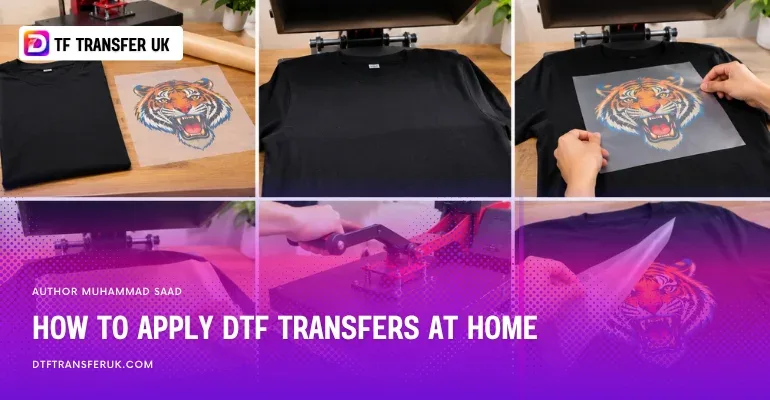
The DTF printing process involves five main steps. Firstly, the digital design is printed onto a transfer film using CMYK and white inks. Secondly, hot-melt adhesive powder is applied to the printed design. Thirdly, the adhesive powder is cured using heat. Fourthly, the prepared transfer is heat-pressed onto the garment. Finally, the carrier film is peeled away, leaving the printed design bonded to the fabric.
The white ink layer provides an opaque background for the colored inks, allowing DTF transfers to reproduce colors on both light and dark garments. The adhesive layer enables the printed design to bond with different fabric types without relying on the fibers' ability to absorb dyes.
DTF transfers are commonly used to customize T-shirts, hoodies, sweatshirts, tote bags, denim garments, sportswear, and other textile products.
According to Epson, prepared DTF transfers can either be applied immediately after adhesive curing or stored for later application. This separates transfer production from garment decoration.
What Is Sublimation?
Sublimation, also known as dye-sublimation printing, is a digital printing method that uses heat to transform solid dye into gas, allowing the dye to penetrate compatible polyester fibers or polymer-coated surfaces.
In physics, sublimation refers to the transition of a substance from a solid state directly into a gaseous state without passing through the liquid state.
The transfer sublimation printing process involves four main steps. Firstly, the digital design is printed onto specialized sublimation paper using dye-sublimation inks. Secondly, the printed paper is positioned against the compatible material. Thirdly, heat and pressure are applied to transfer the dye into the material. Finally, the transfer paper is removed.
Unlike DTF printing, traditional sublimation does not require adhesive powder or a white ink underbase. The transferred dye becomes incorporated into the compatible material instead of forming a separate printed layer on its surface.
Sublimation is commonly used to customize polyester sportswear, jerseys, flags, all-over printed apparel, polymer-coated mugs, tumblers, and other compatible promotional products.
According to Mimaki, sublimation printing has two types: transfer sublimation and direct sublimation. Transfer sublimation uses printed transfer paper, whereas direct sublimation involves printing directly onto compatible textiles before heat fixation.
What Are the Differences Between DTF Transfers and Sublimation?
The differences between DTF transfers and sublimation are their printing processes, ink types, transfer materials, fabric compatibility, color compatibility, print texture, breathability, durability, heat-press requirements, production costs, and product applications.
Comparison factor | DTF transfers | Sublimation |
|---|---|---|
Printing mechanism | Adhesive-based transfer | Dye penetration |
Ink type | Pigment-based ink | Dye-based ink |
Transfer material | PET transfer film | Sublimation transfer paper |
White ink | Uses white ink | Does not use white ink in conventional systems |
Adhesive powder | Required | Not required |
Fabric compatibility | Cotton, polyester, blends, and other compatible fabrics | Polyester and polyester-rich blends |
Garment colors | Light and dark colors | Primarily white and light colors |
Print texture | Thin, flexible surface layer | No additional transfer layer |
Breathability | Depends on print coverage | Preserves the fabric's original breathability more closely |
Durability | Can experience cracking or peeling | No separate print layer to crack or peel |
Heat-press temperature | Generally lower | Generally higher |
Production process | Includes adhesive application and curing | Does not require adhesive curing |
Production costs | Additional ink, film, adhesive, and curing costs | Fewer transfer consumables |
Hard-surface compatibility | Not generally recommended | Compatible polymer-coated hard surfaces |
Common applications | T-shirts, hoodies, tote bags, and workwear | Sportswear, all-over prints, mugs, and promotional products |
1. Printing Process
DTF transfers use an adhesive-based printing process, whereas sublimation uses a dye-transfer process.
In DTF printing, the design is printed onto PET film, coated with adhesive powder, cured, and transferred onto the fabric using a heat press. The adhesive bonds the printed ink layer to the textile.
In sublimation printing, the design is printed onto transfer paper. During heat application, the dye transforms into gas and diffuses into compatible polyester fibers or polymer coatings.
The fundamental difference is that DTF transfers attach a printed layer to the material, while sublimation transfers dye into the material.
2. Ink Composition
DTF printing uses pigment-based inks, whereas conventional sublimation printing uses disperse dye-based inks.
DTF printers commonly use five ink colors: cyan, magenta, yellow, black, and white (CMYK+W). Some specialized printers support additional colors.
Conventional sublimation printers commonly use cyan, magenta, yellow, and black (CMYK) dye-sublimation inks. They do not use white ink.
DTF pigments remain within the transferred print layer, whereas sublimation dyes are formulated to penetrate compatible materials during heat application.
As a result, DTF and sublimation inks are not interchangeable in their standard printing workflows.
3. Transfer Materials
DTF printing uses specialized PET transfer film, whereas transfer sublimation uses coated transfer paper.
DTF film temporarily holds the printed ink and adhesive before application. Once the transfer is pressed and the film is removed, the ink and adhesive remain on the fabric.
Sublimation paper temporarily holds the printed dye and releases it during heat application. The paper is removed after the dye has transferred into the compatible material.
Although both materials act as temporary carriers, they are designed for different ink types and transfer mechanisms.
4. Adhesive Requirements
DTF transfers require heat-activated adhesive powder, whereas traditional sublimation does not require an additional adhesive layer.
In DTF printing, hot-melt adhesive powder is applied to the printed design and cured before garment application. During heat pressing, the adhesive bonds the design to the fabric's surface.
Sublimation relies on the interaction between the dye and the compatible polyester or polymer material. Therefore, a separate adhesive layer is unnecessary in conventional sublimation printing.
5. Fabric Compatibility
DTF transfers are compatible with a wider range of fabrics than traditional sublimation.
DTF transfers can be applied to cotton, polyester, cotton-polyester blends, denim, nylon, rayon, and other compatible textiles, depending on the transfer system and garment characteristics.
Traditional sublimation works best on 100% polyester fabrics. It can also be applied to polyester-rich blends, although the resulting color intensity may decrease because the dye primarily bonds with the polyester component.
Traditional sublimation does not produce the same durable results on untreated 100% cotton because cotton fibers do not have the required affinity for conventional sublimation dyes.
Specialized coatings, intermediate transfer materials, and hybrid printing systems can extend sublimation-related applications to cotton.
6. Garment Color Compatibility
DTF transfers can be applied to both light and dark garments, whereas traditional sublimation works best on white and light-colored garments.
DTF printing uses a white ink underbase that reduces the influence of the garment's original color on the printed design.
Sublimation dyes are not opaque and conventional sublimation printers do not print white ink. Consequently, the original garment color influences the appearance of the transferred design.
For example, a yellow sublimation design printed onto a blue polyester shirt may appear greenish because the garment's underlying color remains visible through the dye.
Similarly, white areas in a sublimation design appear as the original color of the material rather than printed white.
DTF transfers do not have this same limitation because they can reproduce white and opaque colored design elements on dark garments.
7. Print Texture and Hand Feel
DTF transfers create a thin, flexible printed layer on the garment's surface, whereas sublimation does not create a separate transfer layer.
The hand feel of a DTF print depends on the ink coverage, adhesive thickness, design dimensions, and transfer quality. Large, solid designs are generally more noticeable to the touch than small logos or designs with open spaces.
Sublimation preserves the original texture of compatible fabric more closely because the dye penetrates the fibers rather than covering them with an additional adhesive-backed layer.
According to Mimaki, sublimation produces a “no-hand feel” result, whereas DTF creates a flexible surface layer.
8. Breathability
Sublimation generally preserves the original breathability of polyester fabrics more closely than DTF transfers.
DTF transfers cover portions of the fabric with an ink and adhesive layer. Large, continuous printed areas can restrict airflow through the covered portions of the garment.
However, DTF designs that incorporate negative space, halftones, or smaller printed elements leave more fabric exposed and can improve airflow compared with solid designs of similar overall dimensions.
Sublimation does not introduce an additional adhesive-backed layer over the fibers. This makes it particularly suitable for polyester sportswear and performance apparel where garment breathability is an important consideration.
9. Print Durability
Both DTF transfers and sublimation can produce durable, washable designs. However, their resistance to physical wear differs because of how the designs are incorporated into the material.
DTF transfers rely on the integrity of the printed ink layer and its adhesive bond. Poor application, repeated stretching, abrasion, and unsuitable washing conditions can contribute to cracking, peeling, or deterioration.
Sublimation dyes penetrate compatible polyester fibers. Since there is no separate adhesive-backed printed layer, sublimated textile designs cannot crack or peel in the same way as surface transfers.
However, sublimated prints can still fade under certain conditions, including prolonged UV exposure and unsuitable care.
The actual lifespan of both print types depends on material quality, printing conditions, application settings, usage, and garment care.
A universal wash-cycle comparison cannot be established without testing both methods under the same controlled conditions.
10. Heat-Press Temperature and Application Time
DTF transfers generally require lower application temperatures and shorter pressing times than conventional sublimation on polyester fabrics.
For example, Transfer Express recommends applying its UltraColor MAX DTF transfers at 290°F for 12–15 seconds. In comparison, Sawgrass recommends 400°F for 45 seconds as a starting point for sublimation on polyester fabric.
Application setting | UltraColor MAX DTF | Sawgrass polyester sublimation |
|---|---|---|
Temperature | 290°F | 400°F |
Pressing time | 12–15 seconds | 45 seconds |
Pressure | Medium | Medium |
These settings represent specific supplier recommendations rather than universal requirements for either printing method.
The appropriate temperature, pressing time, and pressure depend on the transfer system and the material being decorated.
11. Equipment and Production Costs
DTF printing generally requires more production equipment and consumable types than conventional transfer sublimation.
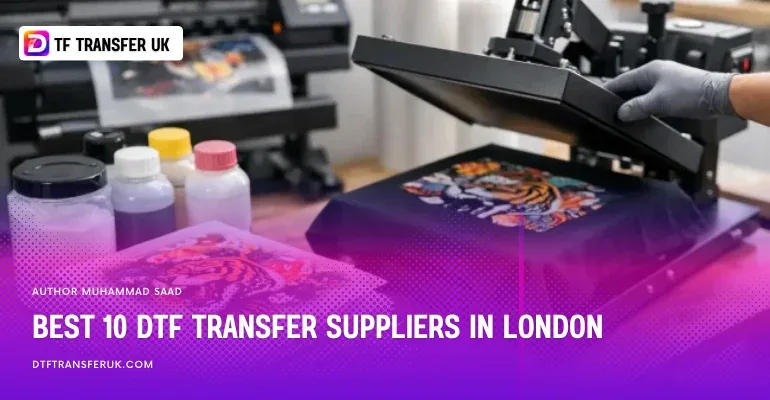
An in-house DTF printing setup typically requires a compatible printer, pigment inks, transfer film, adhesive powder, curing equipment, and a heat press.
A conventional transfer sublimation setup typically requires a sublimation printer, sublimation inks, transfer paper, and a suitable heat press.
DTF printing also involves white ink maintenance and an additional adhesive application and curing stage.
However, businesses purchasing ready-to-press DTF transfers do not need to invest in their own DTF printing and curing equipment.
The actual production cost of either method depends on equipment prices, design dimensions, ink consumption, material costs, labor, maintenance, and order quantity. Therefore, neither method is universally cheaper for every production arrangement.
12. Production Time
DTF transfer manufacturing involves more processing stages than conventional transfer sublimation.
After printing a DTF design, the adhesive powder must be applied and cured before the transfer can be heat-pressed. Sublimation does not require these additional adhesive-processing stages.
However, ready-to-press DTF transfers eliminate these manufacturing steps for the garment decorator.
Production speed also depends on printer capacity, equipment automation, batch size, and the time required for heat application.
Therefore, the number of production stages alone does not determine which method produces more finished garments per hour.
13. Product Applications
DTF transfers are primarily used for textile decoration, whereas sublimation is used for both compatible textiles and polymer-coated hard surfaces.
DTF transfers are commonly used for cotton T-shirts, hoodies, sweatshirts, tote bags, workwear, and garments containing mixed fabric compositions.
Sublimation is commonly used for polyester jerseys, sportswear, swimwear, flags, all-over printed garments, coated ceramic mugs, tumblers, and coated metal products.
Sublimation is particularly suitable for all-over polyester printing because it does not introduce a continuous adhesive-backed layer across the printed fabric.
Standard apparel DTF should not be confused with UV DTF, which is a separate printing technology commonly used for decorating hard surfaces.
What Are the Similarities Between DTF Transfers and Sublimation?
The similarities between DTF transfers and sublimation include digital printing technology, indirect design transfer, heat and pressure application, full-color printing capabilities, design customization, polyester compatibility, print durability, and on-demand production.
1. Digital Printing Technology
Both DTF and sublimation use digital printing technology to reproduce computer-generated artwork.
The designs are prepared using digital design software and sent to a compatible printer. Neither method requires the preparation of a separate physical printing screen for each design or color.
This enables both printing methods to accommodate frequently changing artwork and customized orders.
2. Indirect Design Transfer
Both DTF and transfer sublimation use an indirect printing process.
In DTF printing, the design is initially printed onto PET film. In transfer sublimation, the design is initially printed onto sublimation paper.
The printed artwork is subsequently transferred from its temporary carrier to the final material.
However, this similarity applies specifically to transfer sublimation rather than direct-to-fabric sublimation.
3. Heat and Pressure Application
Both DTF transfers and sublimation use heat and pressure to transfer designs onto compatible materials.
DTF printing uses heat to activate the adhesive and bond the printed design to the fabric. Sublimation uses heat to transform the dye into gas and facilitate its penetration into the compatible material.
Although their transfer mechanisms differ, both require appropriate heat application settings to produce consistent results.
4. Full-Color Printing Capabilities
Both DTF transfers and sublimation can reproduce detailed, multicolored artwork, photographs, illustrations, gradients, and complex graphic designs.
Their digital printing systems combine different ink colors to reproduce a broad range of colors without requiring separate screens for individual colors.
However, the achievable color appearance depends on the printer, ink system, color management, and material being printed.
5. Design Customization
Both printing methods support personalized designs, including names, numbers, logos, photographs, illustrations, and promotional graphics.
Digital artwork can be modified between print jobs without manufacturing new physical printing screens.
This makes both methods suitable for personalized apparel, business merchandise, team clothing, and custom promotional products.
6. Polyester Fabric Compatibility
Both DTF transfers and sublimation can be applied to compatible polyester fabrics.
DTF transfers bond to polyester through their adhesive layer, whereas sublimation dyes penetrate the polyester fibers.
For white or light-colored polyester garments, either printing method may be suitable depending on the required print texture, design appearance, and application.
7. Durable and Washable Prints
Both DTF transfers and sublimation can produce durable prints that withstand repeated washing when correctly manufactured and applied.
DTF durability depends on the ink layer, adhesive bond, and application quality. Sublimation durability depends on dye transfer, substrate compatibility, and environmental exposure.
Both printing methods require appropriate care practices to maintain the appearance of the finished product.
8. On-Demand and Small-Batch Production
Both DTF printing and sublimation support on-demand and small-batch production because digital designs can be printed individually without preparing physical printing screens.
Businesses can produce single customized items, small batches, or larger orders using suitable equipment.
Both methods also allow artwork changes between orders, making them practical for personalized merchandise and print-on-demand businesses.
9. Dependence on Printing and Application Quality
Both DTF transfers and sublimation depend on correct artwork preparation, compatible consumables, material selection, color management, heat application settings, and equipment maintenance.
Incorrect settings can reduce print quality in both methods. DTF transfers may experience poor adhesion or peeling, whereas sublimation may experience incomplete dye transfer, inaccurate colors, or ghosting.